
BYTE | Crypto and economic developments from August–September 2026
Crypto rebounded in August, with all six assets in Newton's Gravity Gauge closing the month higher. Bitcoin kept rising into September before pulling back, a reminder that the climb came with plenty of swings.
All of it unfolded during a busy stretch for household finances: new inflation data, split interest-rate decisions on either side of the border, fresh tariffs and crypto regulatory developments. This Canada crypto market update covers all of it in one place.
The August Gravity Gauge recorded gains across Bitcoin, Ethereum, Solana, XRP, Hyperliquid and Cardano, with considerable variation between assets. The table below reproduces the figures from that monthly snapshot.
Prices reflect beginning-of-month opening and end-of-month closing levels. All prices are in CAD.
September brought another month of significant moves across the crypto market. The table below reproduces the figures from that monthly snapshot.
Prices reflect beginning-of-month opening and end-of-month closing levels. All prices are in CAD.
Bitcoin finished September higher than it began, despite giving back part of its late-month rally.
Bitcoin reached its highest closing level of the month on September 21 before retreating toward month-end. In Canadian dollars, Bitcoin closed September at $119,884.45, up +11.82% for the month.
The month continued a broader recovery that began in August, but the late-September pullback showed that volatility remained a significant part of the market.
QNT moved sharply following Quant announcement
QNT rose sharply in the final days of September after The Clearing House announced that it had selected Quant to support its On-Chain Money Initiative, a tokenized-deposit clearing and settlement network for participating financial institutions.
The announcement concerns Quant's technology and does not state that the QNT token itself will be used by the network. The initiative is expected to become available to participating institutions in the first half of 2027.

Canada's annual inflation rate held steady in August, while grocery price growth slowed. Statistics Canada's September inflation release reported that the Consumer Price Index rose 3.0% year over year, matching July's increase.
Grocery prices increased 2.8% year over year, putting their annual growth below overall inflation for the first time since July 2024. Even so, groceries remained 29% more expensive than in August 2021.
That difference matters at the checkout: slower inflation means prices are increasing more slowly, not necessarily falling. A smaller annual increase can coexist with a grocery bill that remains substantially higher than it was several years earlier.
Canada and the United States took different approaches to interest rates in September.
The Bank of Canada maintained its policy rate at 2.25% on September 2. It described a broadening Canadian economic recovery, but also highlighted increased inflation risks and uncertainty surrounding new tariffs.
The U.S. Federal Reserve, meanwhile, raised its target range by 0.25 percentage points to 3.75%-4.00% on September 16. Its statement cited elevated inflation and said the increase would support a return toward its 2% inflation objective.
The two decisions were responses to different economic conditions, not a synchronized change in monetary policy across North America.
Canada's growth and employment releases also pointed in different directions.
Real gross domestic product increased 0.8% in the second quarter of 2026, equivalent to 3.3% annualized growth. Higher exports, household spending and business investment contributed to the increase.
The more recent August Labour Force Survey, released on September 4, showed that employment declined by 42,000, while the unemployment rate remained at 6.4%.
These reports describe different periods: the GDP figures cover the second quarter, while the employment report describes August. Stronger quarterly growth did not mean uninterrupted improvement in the labour market.
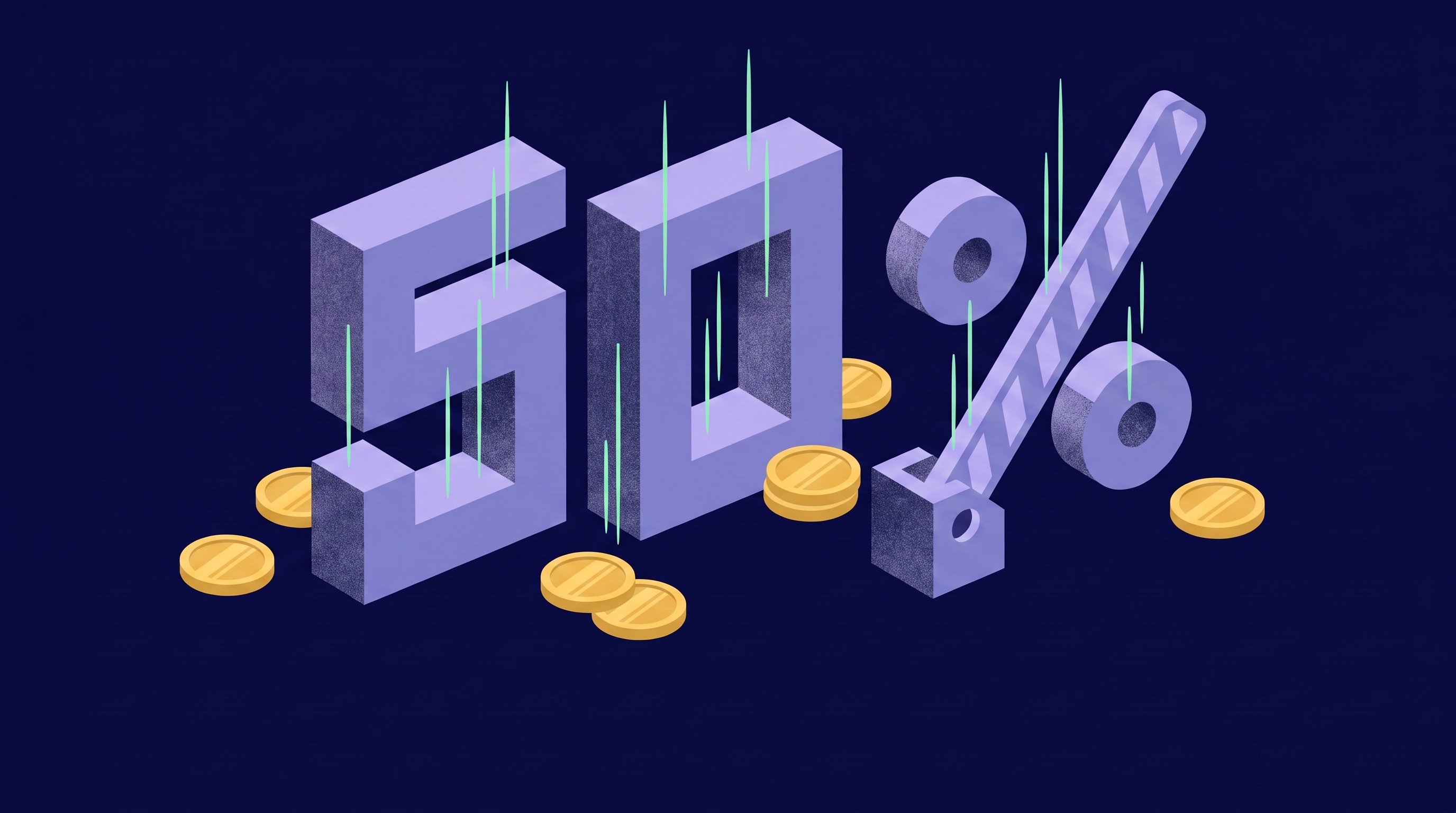
The 50% tariff figure applies to specified goods, not all Canada-U.S. trade.
According to the Department of Finance, the United States imposed a tariff of up to 50% on CAD$27.6 billion of Canadian goods, effective August 22. Canada's response took effect on September 8, with counter-tariffs covering CAD$27.6 billion in imports from the United States. Canadian rates were set at 15%, 25% or 50%, depending on the product.
That context is important when interpreting tariff headlines. The rate, the goods covered and the direction of trade all affect what a particular announcement means.
The Bank of Canada warned that U.S. tariffs and Canadian counter-tariffs could increase business costs and eventually feed into consumer prices, adding another consideration to the inflation outlook.

On September 10, the Office of the Superintendent of Financial Institutions (OSFI) published its final 2027 guideline on banks' crypto-asset exposures.
The guideline addresses the capital and liquidity requirements associated with banks' crypto-related activities. The update recognizes certain risk-offsetting positions across regulated exchanges and takes effect in November 2026 or January 2027, depending on the institution's financial year-end.
For individual crypto holders, the scope is the important distinction. This is an update to how banks account for and manage financial exposures, not an announcement of new trading requirements for retail crypto users.
An August 4 investor alert from the Canadian Securities Administrators described fraudsters impersonating Swiss bank Union Bancaire Privée.
People who had already lost money through fraudulent crypto platforms were being asked to pay upfront fees to recover their funds. The approach used official-looking documents and the bank's branding, although the bank confirmed it had no connection to the scheme.
The warning highlights how an initial loss can be followed by another fraudulent approach. The CSA advises verifying recovery claims independently and contacting financial institutions through their official channels, rather than using contact information supplied in an unsolicited message.
For additional examples and warning signs, read Newton's guide to how crypto scams work and how to recognize them.
The CLARITY Act, which seeks to establish a federal framework for digital-asset markets, failed to advance in a Senate procedural vote on September 15.
The motion received 49 votes in favour and 50 against, falling short of the 60 required. The vote concerned advancing consideration of the bill; it was not a final vote rejecting the legislation itself.
Separately, the Securities and Exchange Commission's August 18 "Regulation Crypto Assets" proposal would establish a tailored framework for certain crypto-related fundraising, including limited registration exemptions and disclosure requirements.
As of October 7, the proposal was not final, with public comments due October 20.
Legislation and agency rule-making are separate processes, and neither is an announcement of new Canadian trading requirements.
For more context on evaluating market coverage, see Newton's guide to crypto headlines versus reality.
The next scheduled economic checkpoints include Canada's September inflation report on October 19 and the Bank of Canada's next interest-rate decision on October 28. Those releases will provide further evidence on how prices and economic conditions are evolving following late summer's developments.
For current market information rather than the historical snapshot above, explore live crypto prices and supported cryptocurrencies on Newton.
Market data and developments in this edition cover August 1 through September 30, 2026.



.png)
.png)